Tuesday, February 18, 2014

Turmeric Ginger Loaf

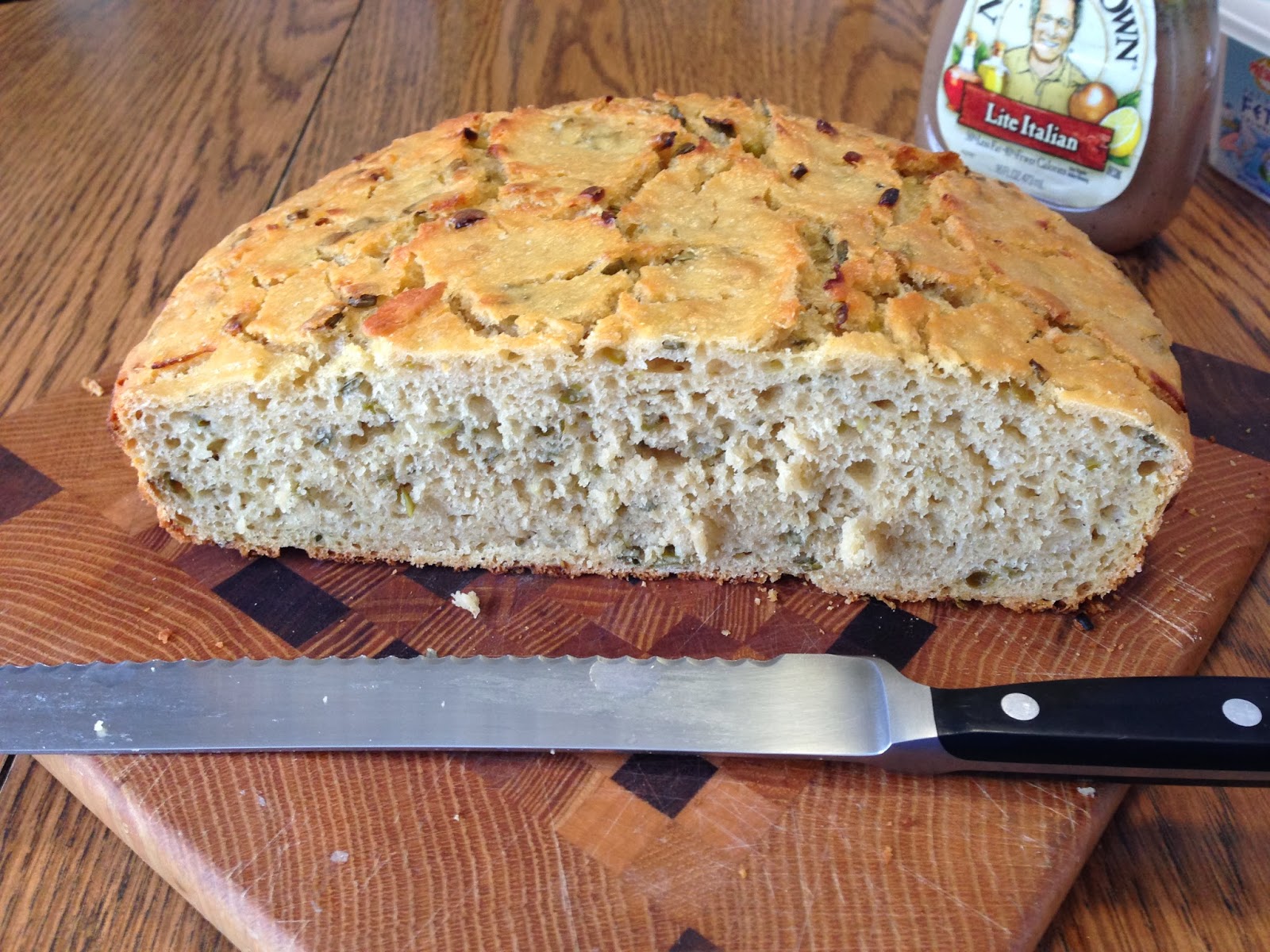
I decided to try a new flavor and thought "what goes well with turmeric?" Indian curry dishes usually have garlic and ginger, so I thought it might be a good combination.

2 cups of Kamut flour
1 cup King Arthur All-purpose
1/4 tsp yeast
1.5 tsp salt
1 tsp sugar
1 tsp ginger
1 tsp turmeric
1.5-2 cup water

I mixed all the dry ingredients in the bowl, gave it a stir and then added minced ginger to it. Next I added 1.5 cup of water and gave it a quick stir. The dough looked quite dry, so I added another 1/4 cup of water and mixed it some more. I ended up adding 2 tbsp more water before the dough was right. One thing I've noticed with kamut flour is it tends to need a bit more water than all purpose or einkorn flour. I don't know why, but the last few loafs I made with kamut, I noticed it did need a little bit more water.

Let the loaf rise over nite 12-14 hours and then form it into a loaf. Let the formed loaf rise for 1-2 hours and then bake at 500F for 30 minutes in a dutch oven.


How does it taste? To my surprise, really good. It doesn't taste like I thought it would.

Tuesday, February 11, 2014

Kamut sour dough

I decided to make a Kamut sour dough loaf and see how it tastes.

2 1/2 cups Kamut flour
1 cup sour dough starter
1 tsp salt
1/4 tsp yeast
1 1/4 cup water
1 tsp oregano

As usual, I mixed the dry ingredients with the sour dough starter and then added the water. Once the dough was mixed, I let it proof in the oven for 2 hours before turning it off to rise over nite.


The next morning, the loaf was ready to shape. It was quite wet, so I did knead it for a minute with lots of flour.

This time I decided to experiment with the baking and rising to see what would happen. Once the loaf was shaped, I put it in the dutch oven to rise for 2 hours. Normally, I let it rise in the bowl and preheat the dutch oven. I got the idea from a friend and both of us were curious what would happen.
This is how it looked before baking. The bread tastes great and has a really nice sour dough flavor. With a little bit of butter it is perfect.


It kind of looks like a cake instead of a regular round loaf.


Friday, February 7, 2014

Kamut Challah

I bought 10lbs of Montana Kamut flour to see how it works for breads. According to the kamut website, it is a brand name for khorasan wheat. I first heard about khorasan from the wheat belly videos on youtube.

This morning I got up early to start a kamut challah. The flour looks similar to regular King Arthur all purpose flour. When I mixed the dough, the texture was smooth and more elastic than einkorn.

5 cups kamut flour
2 cups warm water
1/4 cup honey
1 tbsp salt
1 tbsp yeast
2 eggs
4 tbsp butter


First I dissolve the salt, yeast, and honey in the warm water. Next I scramble the eggs, and add the melted butter to it. Combine egg and water mixture. I gradually added 5 cups of flour until I got a nice dough. Normally, when I use KA all purpose flour it takes about 6 cups of flour to 2 cups of water. I kneaded the dough for about 5 minutes, then let it double in the oven. I use the proof setting and it took about 2 hours.

Knead the dough for 10-15 minutes, then form into a challah loaf. My daughter likes 6 braid, so that's what we did. Let the loaf rise for 1-2 hours, then bake at 375 for 40-45 min. Since my new oven has convection bake, I do 375 for 30 minutes.


How does kamut challah taste? It tastes awesome. It rose just like King Arthur all purpose flour, but the flavor is different. It is richer, the crust was crunchy without being hard, the crumb was soft and moist and the color is darker than all purpose flour. Overall, I like the flavor better than all purpose flour.

Wednesday, February 5, 2014

Sour dough scallion bread

Since the sour dough loaf turned out so nice on Monday, I decided to see how it would work with scallion loaf.

3 cups Einkorn flour
1-1 1/4 cup sour dough starter
2 tsp salt
2 cups chopped scallion
1 cup warm water
1/4 tsp yeast


Having learned my lesson about sour dough starter, today I tried a different approach. I mixed the chopped scallion, flour, salt and yeast first. I added 1 cup of water to the flour mixture. It looked a bit dry, so I gradually added water 1 tbsp at a time until the dough came together like a normal no-knead loaf. The way I chop the scallions is to first cut length wise down the stalk and then 1/4" thick.


I let it rise in the oven on proof setting for 2 hours and then over nite. The next morning the loaf was ready to form a loaf. This time it was pretty sticky, so I had to flour the counter liberally. Before I started forming the loaf, I oiled the mixing bowl. Once the loaf was formed, I put it in the bowl and let it proof in the oven for 1.5 hr. Preheat the oven at 550F. Once it ready, bake the loaf in the preheated dutch oven for 30 minutes.


The loaf turned out nice. I suspected the sour dough would compliment the scallion flavor, but it's unreal how good it is. I'm definitely making this recipe again.

Monday, February 3, 2014

Sour dough einkorn

Last friday I made a challah with the sour dough starter I made. It tasted good, but it isn't a challah. Well not a traditional challah. That got me thinking I should make a regular sour dough loaf to see how it tastes plain. I've never made a sour dough loaf, so I kind of took a wild guess.

3 cups einkorn flour
1 cup sour dough starter
1 tsp salt
1/4 tsp dry yeast
1-1.5 cup water

I mixed the ingredients and let it rise 14 hours. In the morning I tried to pour the dough out on the counter to form a loaf, but it was too wet. To fix that, I added more flour until the dough stopped sticking to the bowl. I didn't measure how much more flour. I'm guessing it was about 3/4 cup. Since my starter is pretty wet, I should have used less water. 1 cup of water is probably enough. The next time I make it, I'll start with 1 cup and gradually add 1 tbsp at a time until it's just right.

Once the dough stopped sticking to the bowl, I shaped it into a loaf. I oiled my mixing bowl and used it for the final rise. When I put the loaf in the bowl, I give it a few turns and rub a bit of oil on top. This helps to prevent it from sticking to the bowl as it rises.

Let the loaf double in size before baking. For me, this took about 1 hr 45min on proof setting in my oven. I removed the loaf and preheated the dutch oven to 550F. Once it was ready, I baked the loaf covered for 30 min and 4 min uncovered.


It will take a few more tries before I dial the recipe in. The flavor of the loaf is wonderful. It reminds me of the San Francisco sour dough I've had in the past when I visited the bay area.

The crumb of the loaf is nice and fluffy with good chewiness. The aroma of sour dough is distinctive and makes the house smell like a real bakery. I had several slices plain without butter or topping. One thing I did notice in the morning is the dough smelled a little like beer.

Thursday, January 30, 2014

Fluffy Einkorn pancakes

This morning I decided to change the recipe a bit to make it a bit more moist. I love the flavor of einkorn flour, but my usual recipe was more dry than using King Arther all purpose flour.

1 1/3 cup einkorn flour
2 tsp baking soda
1 tsp baking powder
1/2 tsp salt
1 tbsp butter
3 tbsp oil
1/4 cup kefir
1 1/2 cup milk
2 eggs

Mix the dry ingredients in a bowl. Mix the eggs, butter, oil and milk in another bowl. Combine and mix, but don't over mix. I cook the pancakes on my LG range, which has a nice non-stick griddle. The pancakes turn out fluffy and moist. With a regular frying pan, I have to use oil, but with my griddle no oil is needed. This produces a pancake that is light, not greasy and flavorful.
The combination of kefir and einkorn produces a rich flavor.


Wednesday, January 29, 2014

Einkorn scallion Loaf

Last nite I decided to try a scallion loaf with Einkorn flour.

3 1/2 cup einkorn flour (from Jovial foods)
1/4 tsp yeast
2 tsp salt
1 tsp sugar
1 big bunch of scallion or 2 small bunches
1 3/4 cups water

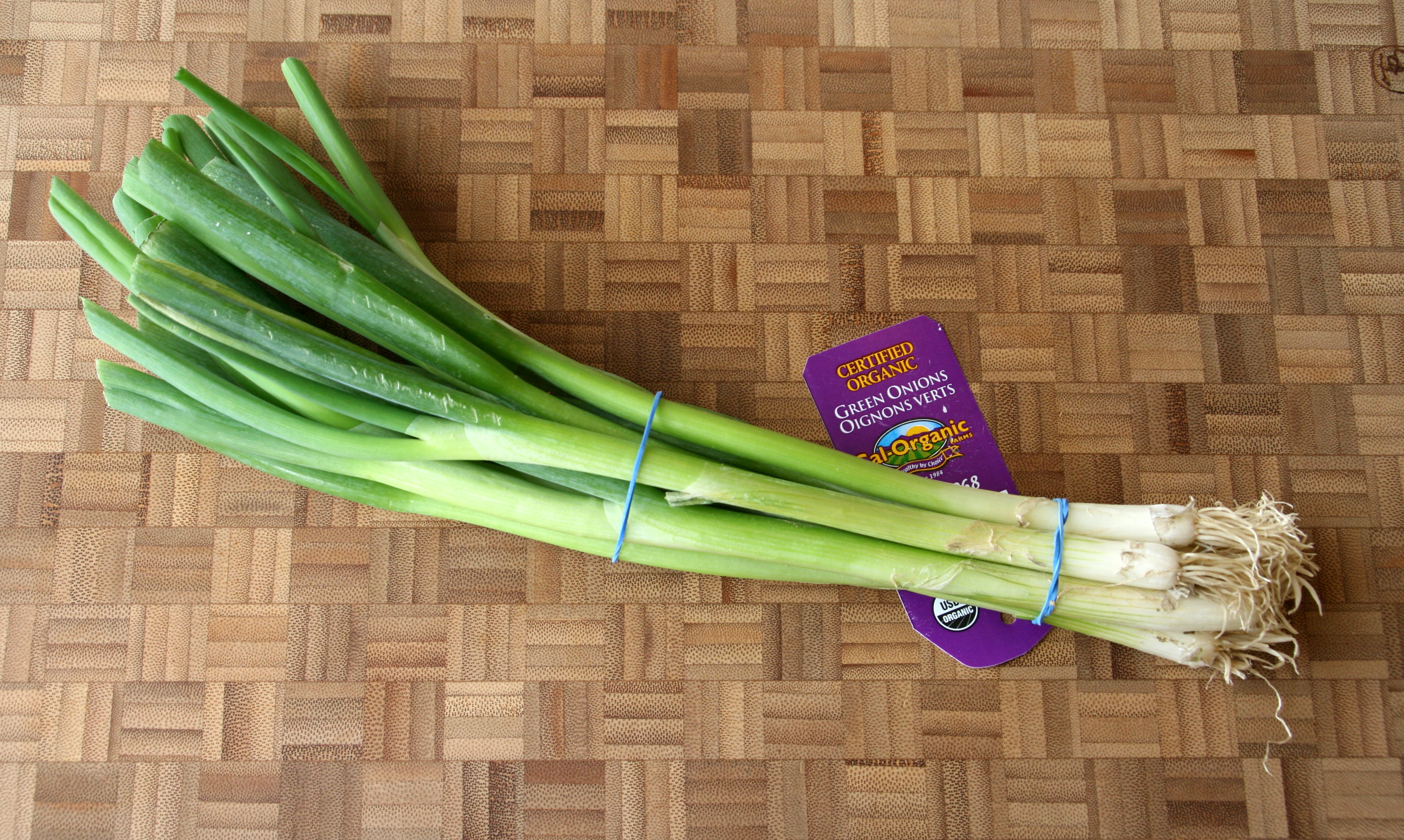
Combine the yeast, sugar, salt, and flour in a bowl and stir a bit. Chop the scallions into small pieces. There's a couple of different kinds of scallion.
At my local Stop & Shop, they sell the smaller variety. My local Shaws sells the thicker Asian scallions, which have a much stronger flavor. I prefer to use the thicker variety and use 1 bunch. With the smaller variety, I use about 2-3 bunches. Once it's chopped, it should be about 1.5-2 cups.

Mix the chopped scallions with the flour. Add 1 cup of warm water and mix. Gradually add the remaining water until you get a nice wet no knead dough. Basically you want wet dough. Depending on the moisture of the scallions, you may need more or less water. Cover the bowl with plastic wrap and let it rise for 14 hours. I put the bowl into my oven to proof for 2 hours before turning it off for the nite.

One thing with using einkorn flour is the dough will be very sticky. Put plenty of flour on the surface before turning out the dough. Before you form the loaf, coat the mixing bowl with 2 tbsp of peanut oil. Any oil will work, but I prefer peanut oil over olive or corn oil. Form a round loaf and place it in the bowl. I turn the loaf over once to make sure it's got oil all around. This prevents the dough from sticking to the bowl too much. Let it rise for 1.5-2 hours in the bowl covered. 45 min before you're ready to bake preheat your dutch oven at 550.

Gently slide the loaf into your dutch oven. I use a rubber spatula to make sure it's not sticking any where. Bake for 30 min covered. After the 30 min, you can bake it uncovered for 5-15 min depending on how much crust you like.


Now that I've made several einkorn loafs, here's what I've learned so far. It takes a bit longer for einkorn dough to rise, so give it more time in the first rising and after it's made into a loaf. Bake it in a dutch oven instead of a loaf pan, baking sheet or stoneware. Cast iron dutch oven with a good lid helps to create steam and has higher thermal inertia. It weighs more than stoneware, but that extra weight helps to keep the temperature high. The heavy lid traps the moisture and helps it rise more during baking. Stoneware is lighter, but it has less thermal inertia, so it cools down a bit before it heats back up. When I slid the loaf into my dutch oven, I could hear the oil sizzle. That's how hot it should be.

For Challah and other loafs that don't fit in a dutch oven, let it rise 2-3 hours after shaping. If your oven has proof setting, proof the loaf until it has doubled, remove it from the oven to preheat and then bake.